Introduction
Telecom companies are awash with vast amounts of data generated from network operations, customer interactions, billing systems, IoT devices, and more. However, data alone isn’t enough — it must be translated into actionable decisions that drive value. Decision Intelligence bridges this gap by combining data analytics, artificial intelligence (AI), and human expertise to guide smarter decisions, faster outcomes, and measurable business impact. (Qualtrics)
What Is Decision Intelligence?
Decision Intelligence is an interdisciplinary approach that integrates data, analytics, AI, and human insight to enhance decision‑making processes. Unlike traditional business intelligence (BI), which focuses primarily on what has happened, decision intelligence goes further — helping organizations determine what to do next by forecasting outcomes and recommending actions.
This evolution from descriptive analytics to prescriptive and real‑time insights enables telecom operators to operate with confidence in a competitive market, turning raw data into strategic advantage.
Why Telecom Data Needs Decision Intelligence
Telecom networks generate petabytes of data daily — from usage logs and network KPIs to customer churn indicators and service interactions. Traditional analytics can summarize patterns, but decision intelligence delivers actionable insight at speed and scale. Here’s why it’s essential:
- Complexity of data sources — Telecom infrastructure and customer systems produce varied and fast‑moving data streams that need coordination and analysis. (
- Competitive pressure — To differentiate in saturated markets, telecoms must make proactive decisions about pricing, network investment, and customer engagement faster than competitors.
- Operational agility — With 5G, IoT, and real‑time customer expectations, decision intelligence helps telecoms adapt operations dynamically rather than reactively.
Core Telecom Use Cases for Decision Intelligence
1. Predicting Customer Churn
Decision intelligence models combine historical usage, service issues, payment history, and interaction patterns to forecast which customers are most likely to leave. Proactive retention campaigns can then be triggered automatically, boosting customer lifetime value and reducing churn.
2. Network Performance Optimization
Rather than simply reporting outages or congestion, decision intelligence can anticipate network strain, recommend resource reallocation, and guide capacity expansion decisions — all in near real‑time. This minimizes disruptions and improves the user experience.
3. Personalized Services and Offers
By integrating customer behavior analytics with AI, telecom providers can deliver personalized pricing, targeted marketing campaigns, or service bundles that resonate with individual user preferences — increasing average revenue per user (ARPU).
4. Fraud Detection and Revenue Assurance
Data‑driven models can detect anomalous patterns indicative of fraud or billing issues. Automated intelligence systems can then flag and act on discrepancies before they impact revenue, compliance, or customer trust.
Operationalizing Decision Intelligence in Telecom
Integrating decision intelligence doesn’t happen overnight. It follows a structured process:

- Data Collection & Integration — Unifying data across OSS/BSS, CRM, and network logs to create a 360° view.
- Advanced Analytics & AI Models — Using predictive and prescriptive models to forecast outcomes and recommend decision paths.
- Human‑AI Collaboration — Experts interpret AI suggestions and validate strategic initiatives.
- Automated Execution — Decision engines enable real‑time adjustments, such as dynamic pricing or traffic steering.
- Continuous Feedback & Improvement — Models learn from outcomes, becoming more precise over time.
Measuring Strategic Business Value
1. Increased Revenue Streams
By better targeting offers and reducing churn, telecom companies can unlock new revenue opportunities and increase profitability.
2. Improved Operational Efficiencies
Optimizing network use and automating routine decisions reduces costs and enhances service reliability.
3. Competitive Differentiation
Decision intelligence supports rapid innovation — enabling telecoms to offer next‑generation services and experiences that differentiate them from rivals.
Challenges and Considerations
Despite its potential, decision intelligence implementation requires careful planning:
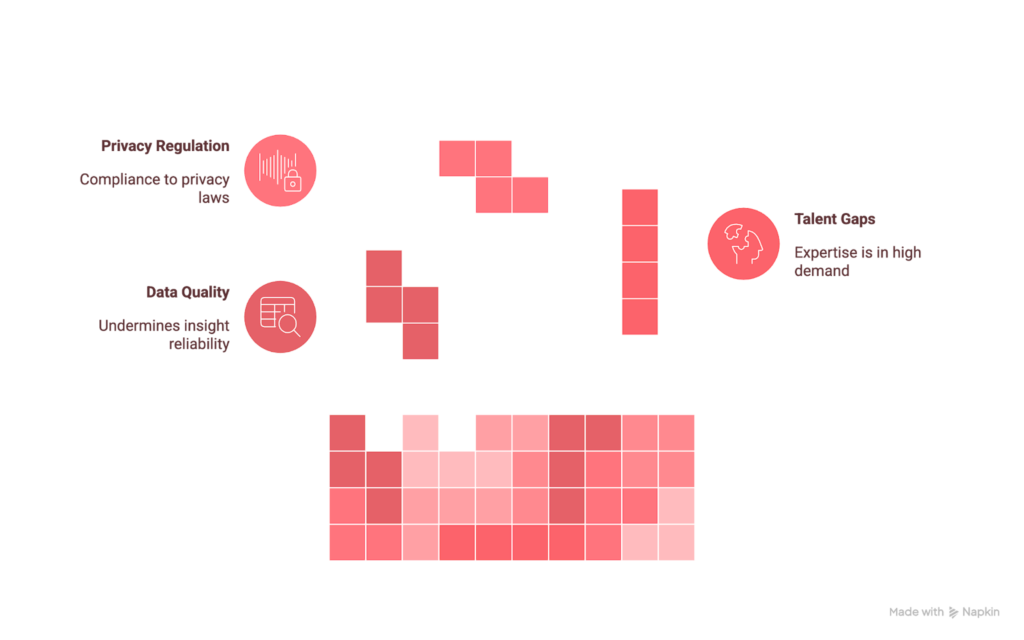
Addressing these challenges effectively lays the groundwork for far‑reaching value creation.
Future Outlook: The Telecom Advantage
The trajectory of telecom data analytics suggests a future where real‑time decision intelligence becomes standard practice. As networks evolve with 5G, edge computing, and distributed IoT frameworks, the value of rapid, AI‑assisted decision making will only increase. Decision intelligence enables telecom companies to:
- Move from reactive reporting to proactive strategy
- Anticipate customer and network needs
- Create personalized, profitable offerings
In essence, it transforms telecoms into data‑empowered tech enterprises capable of sustained growth.
Conclusion
In today’s competitive telecom landscape, data is only as valuable as the decisions it informs. Decision intelligence transforms raw data into strategic business value, enabling telecom operators to predict outcomes, personalize experiences, optimize networks, and unlock new revenue opportunities. By blending AI, data analytics, and human judgment, decision intelligence, as championed by firms like Knot Solutions, equips telecom leaders with the clarity and confidence needed to navigate an uncertain future and deliver sustained business success.